



The Monday After • Jun 8, 2026
Plodding
 Darren Carlson
On May 31, 1792, a thirty-one-year-old cobbler-turned-pastor stood before a gathering of Baptist ministers in Nottingham and preached what came to be called the Deathless Sermon. Taking his text from Isaiah 54, William Carey delivered the line that would echo through two centuries of evangelical missions: "Expect great things from God; attempt great things for God."
Within months, the Baptist Missionary Society was born. Within a year, Carey was on a ship to India. The motto became a battle cry, and Carey became, in the popular telling, the father of modern missions.
We love the quote because we love the man at the moment he said it — young, fiery, convinced. But the Carey who shouted those words from a Nottingham pulpit is not the Carey who spent forty-one years in Bengal. And if we listen only to the young man, we miss the more useful pastor that the older man became.
Consider what actually happened. Carey arrived in India in 1793 expecting, in his own words, that the conversion of the country would come quickly. It did not. He buried his five-year-old son Peter in their first year. His wife Dorothy retreated into mental illness from which she would never emerge. His funds ran out. His co-laborer disappointed him. And for seven long years, he preached the gospel in Bengali without seeing a single Indian convert. The first baptism — Krishna Pal, a carpenter with a dislocated shoulder — did not come until December 1800.
Somewhere in those seven years, the rhetoric began to change. In 1798, writing to his sisters from India, Carey said something that would never fit on a missions conference banner: "I have, however, no news to send ... at best we scarcely expect to be anything more than Pioneers to prepare the way for those who come after us may be more useful than we have been." That is not the language of a man expecting great things. That is the language of a man who has learned to hope without a timeline. Years later, reflecting on his arrival, he would admit, "When I left England, my hope of India's conversion was very strong; but amongst so many obstacles, it would die, unless upheld by God."
And when, near the end of his life, his nephew asked how he wanted to be remembered, Carey did not point back to the great motto. He said this: "If he gives me credit for being a plodder, he will describe me justly. Anything beyond this will be too much. I can plod. I can persevere in any definite pursuit. To this I owe everything." The headstone he chose for himself in Serampore reads, "A wretched, poor, and helpless worm, on Thy kind arms I fall."
Expect great things. Attempt great things. I can plod. A wretched, poor, and helpless worm. These are the bookends of the same life, and to quote only the first set is to misuse the man.
This is the danger of quoting heroes without their decades. We freeze a man at his most quotable moment and then conscript him into our enthusiasms. We turn an exhortation that was meant to dislodge a sleeping eighteenth-century Calvinism into a promise that God owes us visible results if we will only attempt boldly enough. Carey's motto, ripped from its setting, has been used to underwrite everything from naive short-term trips to inflated fundraising appeals to crushing expectations laid on missionaries who, like Carey himself, are giving their lives to fields that yield slowly.
The same Carey who wrote An Enquiry in his thirties wrote the Serampore Form of Agreement in his forties, a document soaked in patience, indigenous partnership, and the slow work of language and printing. He had not abandoned his earlier conviction; he had buried it in seven years of soil where nothing seemed to grow, and what came up was hardier, less photogenic, and more durable.
The man at sixty is the one who has done the actual ministry. He is the one whose words have been weighed against decades of obstacles, disappointment, and unanswered prayer. He is, frankly, the one we should be quoting if we want our people prepared for the long road.
None of this is to dismiss the Deathless Sermon. We need young people to expect great things. We need them to attempt great things. The Particular Baptists of 1792 needed a thirty-one-year-old to embarrass them with a motto, and the church in every generation needs the same kind of holy impatience. But we also need the older voice. We need the one who has watched the great expectations get sanded down by reality and replaced with something better: the quiet conviction that God is faithful, that the gospel is going forward whether or not we see the harvest, and that the most important word in the missionary vocabulary may not be "great" but "plod."

A young man in Pennsylvania belonged to an atheist club. The club decided to make a project of it: comb the used bookstores, buy up every Bible they could find, and burn them. He did his part. But for reasons he could not quite explain, he set one copy aside. He would read it first, he told himself — know the enemy.
He started in Genesis and was immediately thrown. The book was not what he thought it was. So he kept reading. Then he began to memorize, not because he was being persuaded, but because he wanted ammunition. He intended to argue Christians out of their faith using their own scriptures.
He came to our church on a Sunday, brought by a Lutheran friend who had never set foot in an evangelical church before. It was the first time in his entire life that he had been inside a church of any kind. Both of them said afterward that they had never experienced anything like it. For the young man, it was overwhelming.
The following Tuesday morning, sitting in the Western Café in Bozeman, he became a Christian.

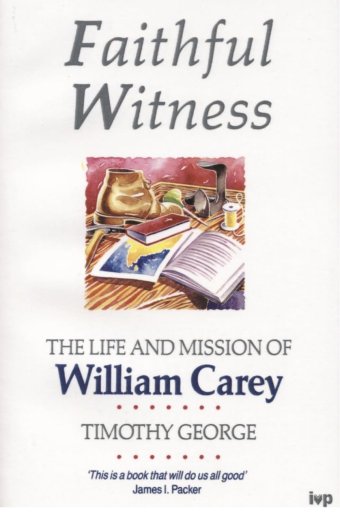
Speaking of Carey ...
Thanks for checking in.
Sign up here to receive Darren Carlson's The Monday After email. This weekly newsletter is designed to encourage your faith and share inspiring stories of what God is doing around the world. Each edition features a short devotional, a story that will give you a glimpse of His work in unexpected places, and a resource you might find helpful.
6.1.26Being Lonely at Church
Over the years, I've talked with a lot of people who left a church because they felt lonely there. No one talked to them. They felt like outsiders. They fell through the cracks. Sometimes that's true. Churches can be unwelcoming. People do get overlooked. I've seen it, and I've been part […]
5.18.26On Knowing God
When people ask me, "What's the best argument for God?" my reply now is, "Best for whom?" A grieving parent is not comforted by the fine-tuning of the cosmos. People need different kinds of reasons: intellectual coherence, existential purpose, and emotional solace. Our picture of God is inevitably shaped by feelings […]
5.11.26Paul Didn’t Obey Christ Until the Church Laid Hands on Him
If you are going out for cross-cultural mission work — ask yourself: who is sending you? Have you paused to think about that at all? Your heart is right. You read Scripture, you see the call to go, your heart burns — all good. But none of us is our own […]
5.4.26A Goal of Frontier Missions is Domestic Ministry
3 John is a short letter. You can read the whole thing in about two minutes. The Apostle John is writing to his dear friend Gaius. He says he loves him "in the truth." It's a warm letter. John has received a kind of ministry update — some itinerant missionaries had […]


